The question
What can underwater recordings tell us about how human activity changes the ocean’s acoustic environment?
The work
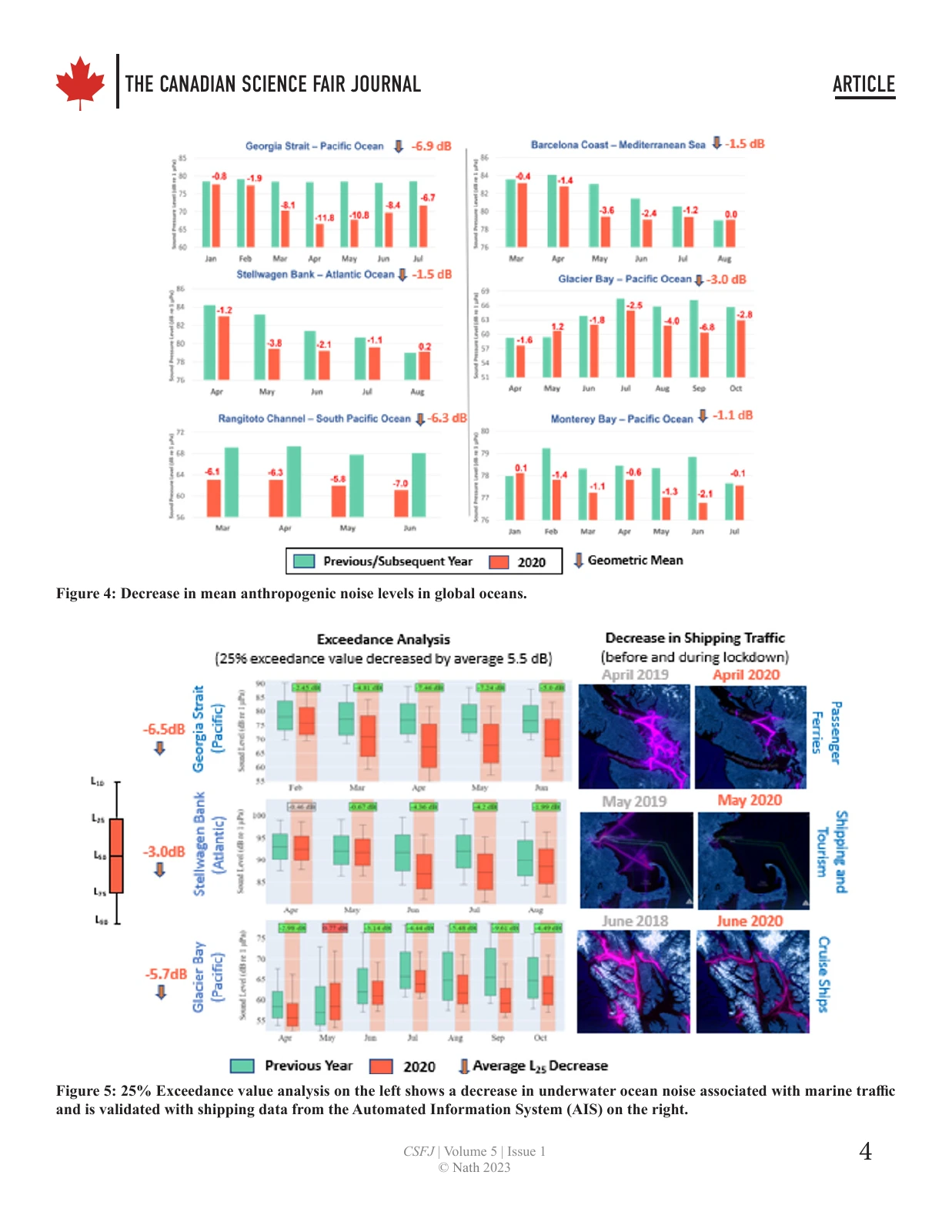
I analysed open hydrophone recordings to study changes in ocean noise during the pandemic, then developed MonitorMyOcean as a public-facing way to explore the research. This work connects scientific computation with communication about a largely invisible form of pollution.
Growing the dataset
The Barron Prize profile describes how I expanded the study through contact with 21 ocean researchers, assembling 24 cumulative years of hydrophone recordings across datasets.
Research record
The project received a Second Award in Earth and Environmental Sciences at Regeneron ISEF 2022. Related work appears in a Canadian Science Fair Journal article and conference abstracts, including an AGU 2023 poster.
Continuing the work
Subsequent research explored the detection of multiple marine-mammal species in hydrophone recordings. You-Oceans extends this direction into sensing hardware and broader engagement.